 12 March 2020
Drone Technology Trends Shaping the Future of India’s Sky
AI, Autonomy, and Training Fuel India's Unmanned Aerial Revolution.
The Indian drone industry is experiencing an unprecedented boom, driven by the forward-looking Drone Rules, 2021, and strong governmental backing like the PLI scheme and the 'Drone Shakti' initiative. No longer confined to recreational use, drone technology is rapidly integrating into the core infrastructure of the nation, promising to contribute billions to the economy by 2030. This revolution is powered by three key trends that are fundamentally reshaping the role of every drone operator and the future of the Indian sky.
Technological Advancements: The Rise of Smart Drones
The future of the Indian drone sky is intelligent and autonomous. New technological integrations are boosting efficiency and enabling complex missions that were previously impossible.
- AI and Machine Learning (ML): Drones are increasingly equipped with AI-powered software for real-time decision-making. In precision agriculture, AI-enabled drones can analyze crop health from multispectral imagery and autonomously spray pesticides only where needed, dramatically reducing chemical usage and waste. For infrastructure inspection, AI detects defects like cracks or corrosion, transforming the role of the drone operator from pilot to data analyst.
- Swarm Technology and BVLOS: The adoption of swarm technology allows multiple drones to coordinate and execute tasks simultaneously, boosting efficiency in large-scale operations like land mapping or emergency response. Furthermore, the push for Beyond Visual Line of Sight (BVLOS) approvals crucial for logistics and long-range surveys is driving innovation in safety features and advanced communication systems to ensure secure operation of the drone over vast distances.
- Indigenous Manufacturing: Government initiatives are strongly promoting the domestic manufacturing of drone systems and components (Drones as a Service DaaS), leading to customized, cost-effective solutions tailored for Indian operational environments, particularly in challenging rural or high-altitude areas.
Industry Integration: From Agriculture to Logistics
The commercial application of drone technology is rapidly diversifying, creating massive demand for skilled personnel across nearly every economic sector.
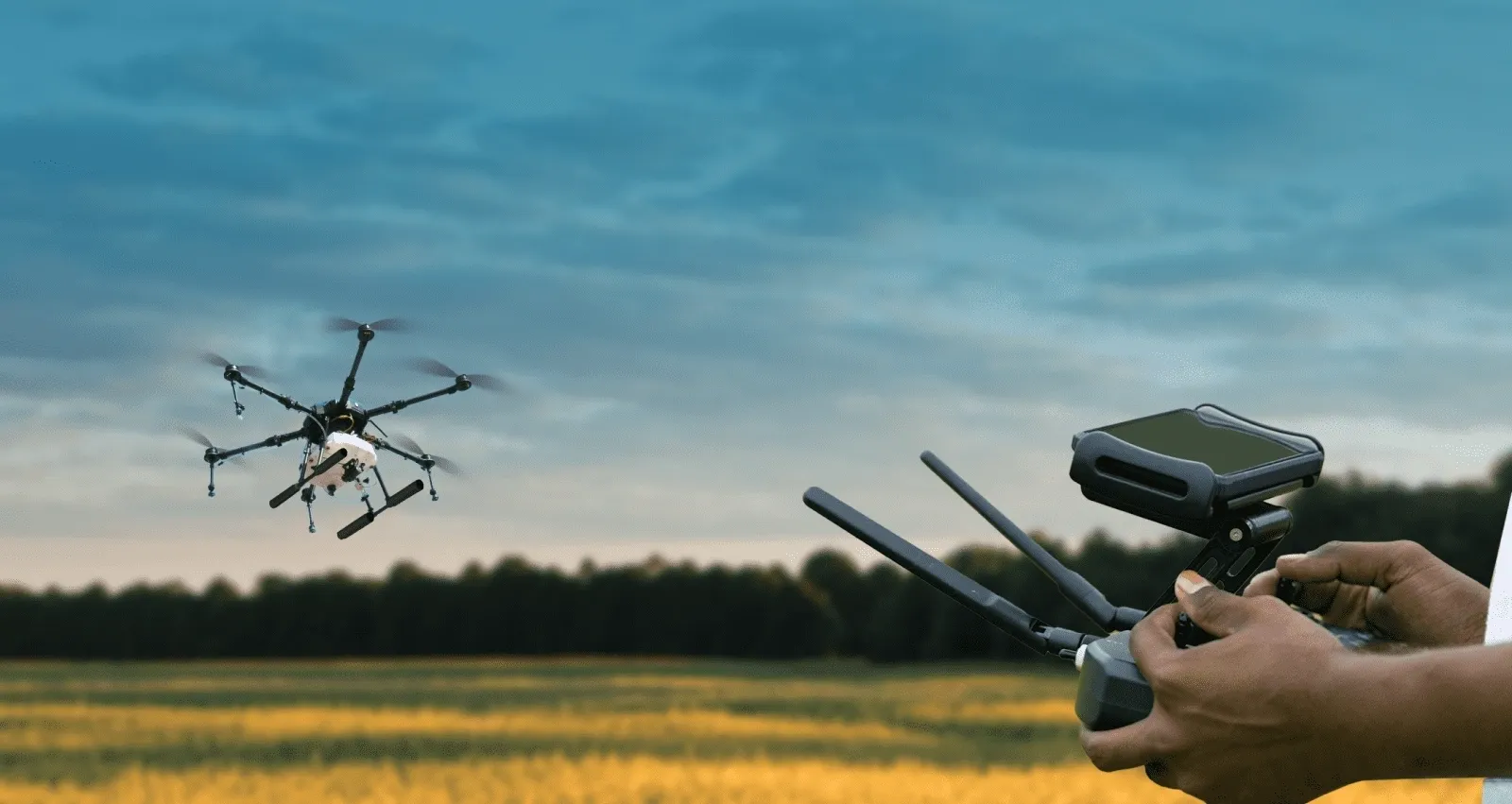
- Precision Agriculture: Known as Kisan Drones, these UAVs are transforming farming. They provide accurate data for variable-rate fertilization, yield monitoring and quick spraying, helping farmers increase efficiency and productivity. This massive shift requires specialized drone training focused on agricultural protocols and payload management.
- Logistics and Delivery: Test flights for last-mile delivery of essential goods, especially in remote or difficult to access areas, are paving the way for full-scale drone logistics networks. This requires the development of highly reliable, hybrid-winged drones capable of long endurance.
- Infrastructure and Mapping: Drones are now indispensable for monitoring vast infrastructure projects from highways and railway tracks to power lines and oil pipelines. They offer fast, safe, and highly accurate aerial surveying and 3D mapping, significantly reducing inspection time and improving worker safety for the drone operator teams involved.
The Human Element: Mandatory Drone Pilot Training
The single most critical factor shaping India’s aerial future is the officialization and professionalization of the drone operator workforce through certified drone pilot training.
- DGCA Mandate: The Directorate General of Civil Aviation (DGCA) has made certified drone training mandatory for all commercial drone operations. This ensures that every professional drone operator possesses the requisite knowledge of air law, safety protocols, and flight mechanics.
- Standardized Curriculum: DGCA-approved Remote Pilot Training Organisations (RPTOs) are providing structured courses that combine theoretical knowledge (air traffic procedures, meteorology) with rigorous practical flying sessions. This standardized approach guarantees competence and instills safety culture, which is vital as the density of drones increases in the airspace.
- Career Opportunities: The government projects a need for over 100,000 certified drone pilots in the coming years. This demand is creating lucrative career paths not just as pilots, but as data analysts, maintenance technicians, and specialized drone training instructors. Investing in professional drone pilot training is the key to capitalizing on this massive employment wave and becoming a certified professional in this futuristic field.
Take the First Step: Secure Your Role as a Certified Drone Pilot!
The future of India’s sky is being built now, and certified professionals are the foundation. Don't be left grounded. Enroll in DGCA-approved Drone Pilot Training today to gain the expertise and official credentials that position you at the forefront of this technological revolution. Master the skills to operate the drone technology of tomorrow and transform your career!